
About2
Jump to….
Making the Archive
The develoment process
Using Matrix Open
Navigating the site
Recognising Friction
Emerging themes
Accessing Materials
Locating originals
Acknowledgements
Thanking helpers
Site map
About Matrix Open Archive
Who were Matrix?
In the 1980s, the London-based feminist architects’ practice Matrix was one of the first worldwide to bring issues of gender centre-stage to the design of the built environment.
Between 1981-1994, Matrix women’s design co-operative worked on state-funded social building projects in the city, and co-explored new building types often ignored by a male-dominated profession. These included women’s centres and refuges, facilities for women and children, construction training workshops and lesbian and gay housing projects. It was radical, not only by being a women-led platform, but by integrating new interdisciplinary and intersectional ways of working across theory and practice. This included developing ways of designing collaboratively, which valued women’s involvement in all stages of the evolution of a building, starting from making those processes accessible to non-experts. As a collective they also delivered publicly funded architectural support and guidance; supported educational programmes to increase access for women into architecture and building; as well as producing research, talks and writing on space and gender through a variety of events and publications.
These innovations are still relevant for architectural practitioners, students, educators and others keen to find new creative, critical forms of architectural education and practice that go beyond the ‘Starchitects’ approach to architecture and the ‘canon’ of works considered important, associated with it. This approach assumes buildings are created by individual geniuses rather than through complex processes involving diverse people, knowledge and skills; and that archives contain only the building design drawing and architectural photographs of the ‘product’; excluding the crucial work of development, construction, debate and use. We hope this archive will also be of interest beyond architecture, in exploring different forms of radical organisation aiming to change how we live, questioning what various societal structures do to value particular groups of people and not others; and what they could be doing.
A BRIEF HISTORY
Matrix aimed to be a non-hierarchical worker’s co-operative in which all members were paid the same and had an equality of responsibilities. It built on the work of many other feminists across Europe and the USA who were also investigating building and urban design and was connected to several similar campaigns across the UK, from community action and squatting to women in construction and in planning.

In 1970s and 80s Britain, there were increasing grassroots challenges to government planning and architecture, as it imposed high-rise public housing schemes, comprehensive redevelopment and massive road-building programmes on cities and towns. Across the country, community groups fought for a say in the design of their localities. This also had an impact on architects and planners, some of whom joined forces with these groups to campaign for a different and more equitable approach to building and urban design.
Organisations such as the Architects Revolutionary Council (ARC), Community Technical Aid Centres (CTACs) and the New Architecture Movement (NAM) criticised conventional ideas of professional expertise, where architects and planners ‘stood above’ ordinary people and made decisions on their behalf. NAM, for example, believed that good architecture should be available to all regardless of wealth or status. Through their newsletter, SLATE, they also called on architects to unionise, recognising that many people working in architecture and construction were themselves poorly paid and worked long hours.
For many women in NAM, these issues were inherently tied to patriarchal power structures. Architectural education and practice remained primarily white, middle class and male, and continued to reinforce stereotypes about women as architectural students (‘they would just get married’), design practitioners (‘only good at designing interiors’) and as users (only leading ‘domestic’ lives). In response, some women in NAM got together to explore these issues; leading to the formation, first, of a women’s group called Feminist Architects Network (FAN) in the late 1970s and then the development of an offshoot called the Feminist Design Collective, which in 1981 formally became Matrix Feminist Design Cooperative.
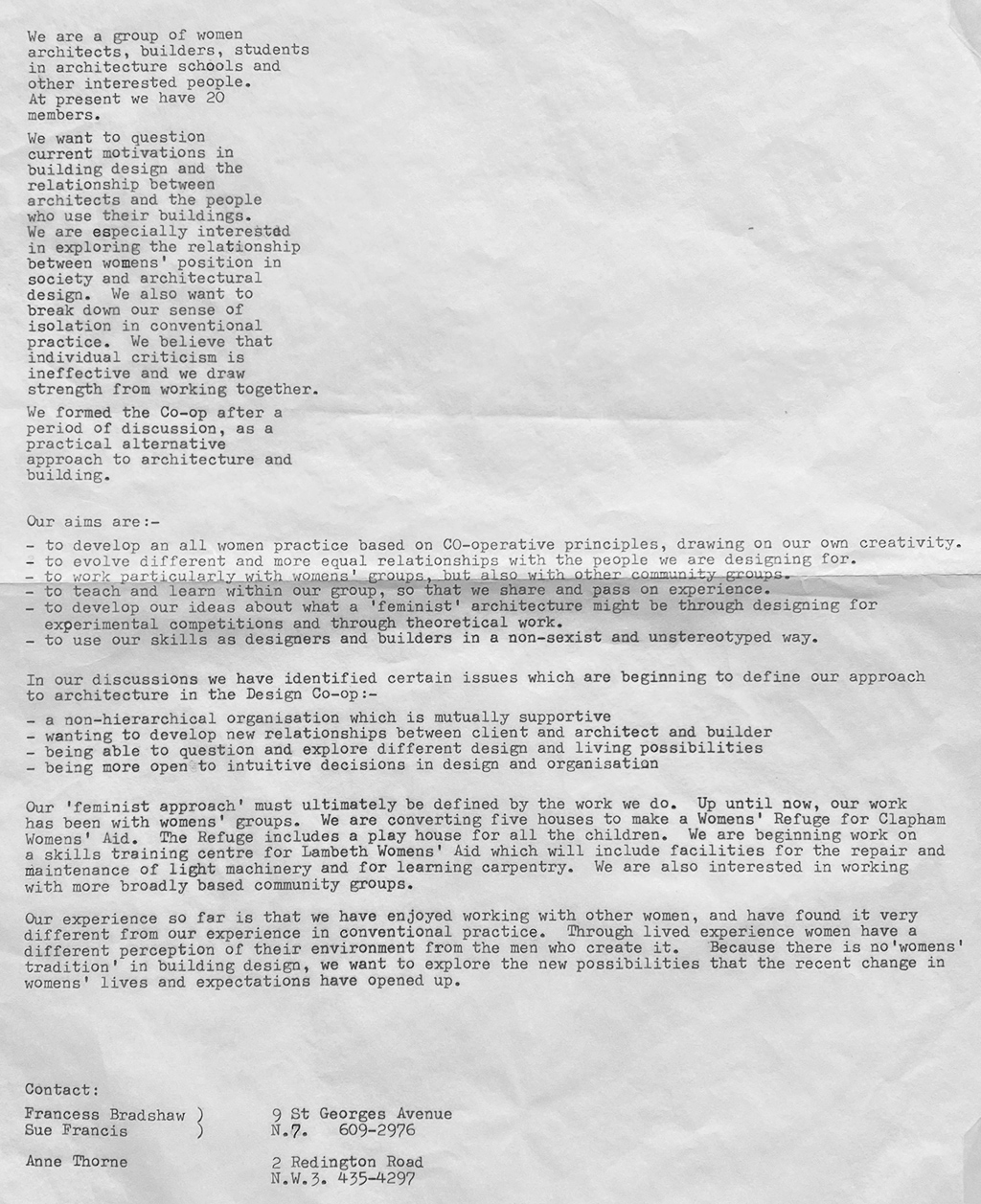
Whilst from this point Matrix was organised under a single name, it was an umbrella for many different roles, relationships and perspectives. Of those involved, some were already architects, some recent graduates, whilst others bridged related movements such as women working in construction, squatting and housing and community activism. From 1981 to 1994 – the period Matrix operated as a formal architects’ practice – multiple women were involved in fundraising for specific projects, helping out with events and publications, undertaking related research and writing, engaging in public discussions, providing expert support to the young and still inexperienced feminist practitioners, forming a Matrix book group (to co-produce Making Space: Women and the Man-Made Environment) and getting involved in education for women in manual trades and an Access programme for Women into Architecture and Building (WIAB), based at the then Polytechnic of North London.
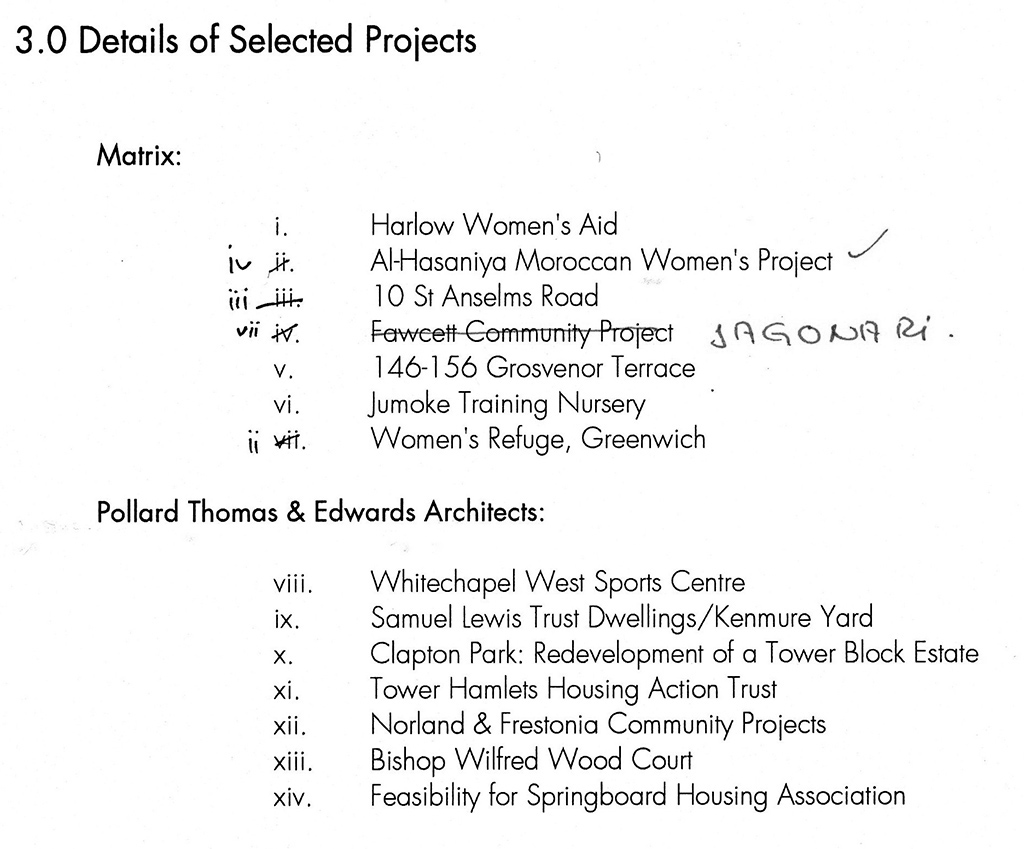
Matrix was also born out of, and supported by its local political context, particularly with the rise of a radical left leadership at the Greater London Council (GLC) from 1980. This provided funding to the city’s community and women’s groups, enabling not only feasibility studies that built on user participation, but also opportunities for more ambitious building projects with grassroots organisations and campaigns. When the GLC was disbanded in 1986 (by a Conservative government), Matrix continued its work, but in a much more difficult funding context, which ultimately made continuing not financially viable. For a short period – in an attempt to keep going – Matrix shared offices and work with the architects’ practice Pollard Thomas Edwards, undertaking some projects as Matrix, and some with PTE. But ultimately this strategy was not possible to continue.
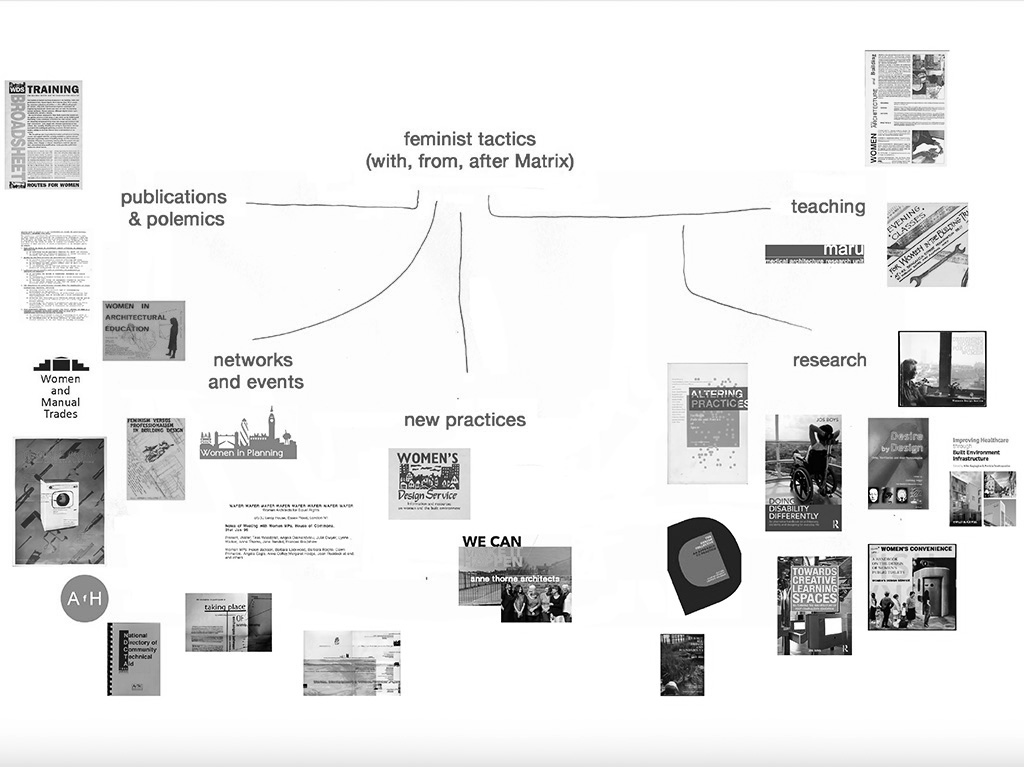
Whilst Matrix was unable to continue as a formal design practice, many of the women connected with it have gone on to engage with feminism and architecture in a variety of ways. – through their own household arrangements, by developing alternative forms of architectural, building and artistic practices, and through teaching, research. writing and campaigning. Matrix, then, has been just one moment in ongoing and often uneven processes of feminist architectural discourse and action, The Matrix Open feminist architectural archive is not intended to imply that Matix was foundational in any way, only that there are always valuable learnings from the past, as we revisit previous attempts towards imagining a more equal world, from the perspective of current day challenges.
“Buildings do not control our lives. They reflect the dominant values in our society, political and architectural views, people’s demands and the constraints of finance, but we can live in them in different ways from those originally intended. Buildings only affect us insomuch as they contain ideas about women, about our ‘proper place’, about what is private and what is public activity, about which things should be kept separate and which put together.“
From the introduction to Making Space: Women and the Man-made Environment. Pluto Press 1984
Making the Archive
Architectural archives are a vital source for scholars to research and interpret the history and development of ideas within the discipline, and as the basis for exhibitions that make artefacts and associated narratives available to wider audiences. However, mainstream archival practice has been historically centred on ‘Starchitects’ – leading to selective representation and tending to perpetuate a particular history that limits what stories get told and by whom. This is both because archival access is often restricted to researchers from within the academy and because alternative architectural practices and projects remain seriously under-represented in collections, tending to be more fragmented as well as under-resourced with many artefacts uncatalogued and undigitized; so that finding relevant sources is difficult and time-consuming.
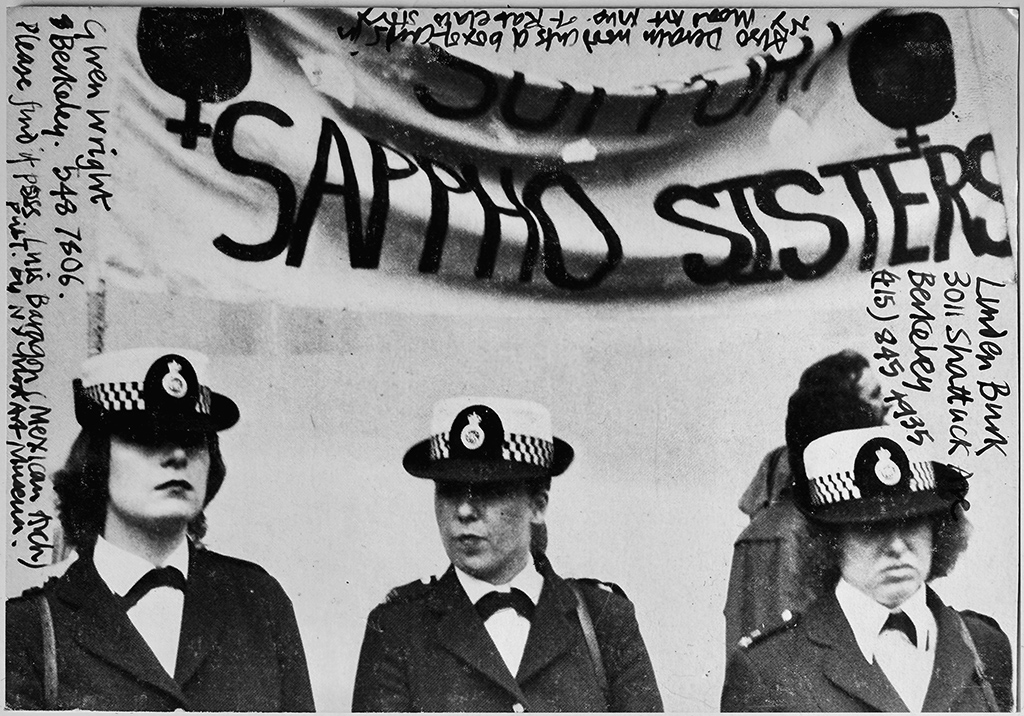
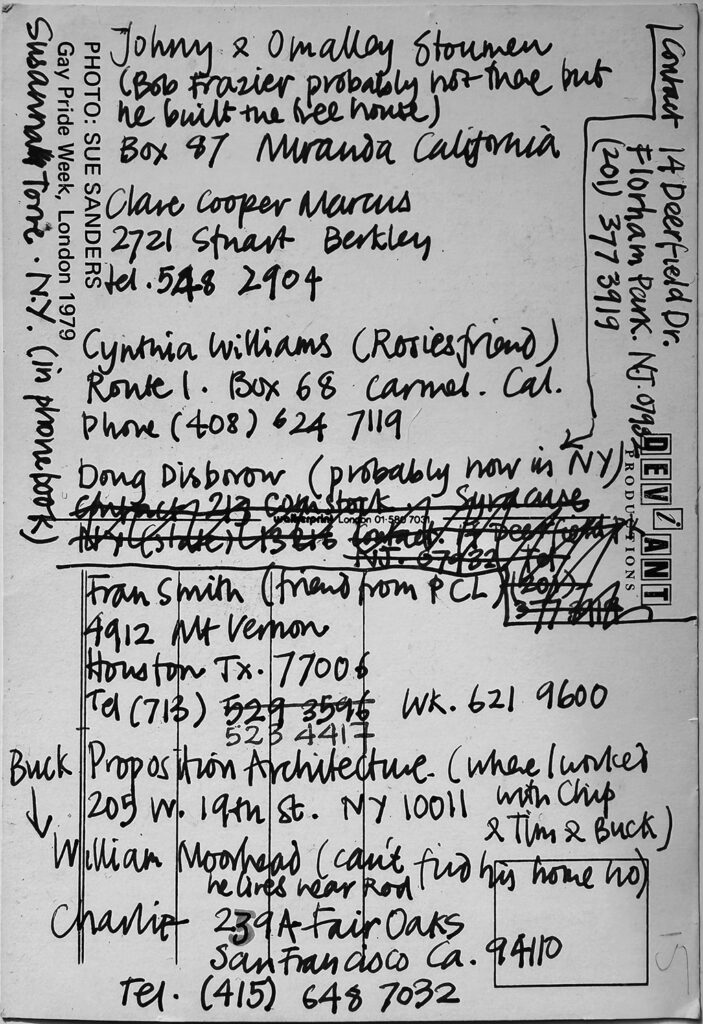
As with many community-based organisations pre-internet, Matrix materials were archived haphazardly, under beds and in attics if kept at all. Finding this material has been slow and only made possible by the wonderful willingness and help of previous Matrix members and associates (with much of it collected during the Covid 19 pandemic).
From the start, the aim was to co-create an online database of archival resources related to Matrix, centred on open access. This was done in collaboration with some original Matrix members, and with students, educators and researchers internationally, to prototype innovative ways of engaging with primary sources that are not limited by academic notions of what constitutes ‘proper’ scholarship – instead opening up to new ways of learning and doing. This process was undertaken through a series of knowledge exchange seminars over several years, supported by already existing informal feminist architectural networks.
In the spirit of Matrix’s own experiments, Matrix Open explores how an online resource can engage diverse participants by providing open access facsimiles, so people can create their own collections. Easily downloadable and free PDFs mean that anyone can put together materials reflecting their own interests; and use these to create their own narratives through writing or displays. The archive aims to offer a variety of narratives and perspectives on artefacts, enabling a range of different kinds of engagement. And its development was underpinned by current feminist practices around making space for under-represented voices, alternative forms of curation and collaborative learning across networks.
In addition, the project explores the wider research and innovation implications for non-normative archives, collections and exhibitions as well as its intersections with decolonising the curriculum agendas, and with community-based architectural and spatial practices. In the current UK situation of increasing polarisation and inequality, architectural education and practice needs urgently to address social issues, and to engage more explicitly with how the discipline can act to ameliorate differential and discriminatory social, spatial and material practices.
OUR APPROACH
This project asks what the archive of an architectural practice might look like when the collation of archival material aims to be a starting point. How can an archive help to explore the complex relationships between different forms of architecture, space-making and the lived experiences of diverse bodies and mind? Rather than being organised in a way which privileges one linear narrative of who Matrix was and what they did, the archive is accessed through multiple connections and formats, and from different points of view. The collected artefacts are understood not as definable things, but rather as moments in the uneven, long-winded and often contradictory processes of making a building, and of changing attitudes and cultures. Multiple iterations of MOfaa prototyped innovative ways of engaging with primary sources that are not only limited to academic notions of what constitutes ‘proper’ scholarship but also open to new ways of learning and doing. This means we are also asking questions about what constitutes an archive, about what artefacts remain and why; and about what stories get told and what (and who) gets left out.
This method also speaks to the complexity of contemporary investigations of feminist architecture practice in the near past, that also – despite the impact of the digital – still rely on sources that are often scarce, unorganised, and do not have a written context. Many artefacts sit unarchived, in folders, bags and all manner of informal containers, as was the case with many of the artefacts gathered in MOfaa. This is, therefore, a partial archive. The contents act as loose assemblages within the archive that can inform our knowledge of past radical activities but still have many gaps and unknowns. This is actually much closer to the reality of attempting to undertake radical practices and make alternative buildings with the direct involvement of their users; trying out new forms of organisation and design is also always incomplete and imperfect.
The development of a Matrix Open archive has been coordinated by Jos Boys, a founding member of Matrix, together with researcher Rachel Tyler and Anne Thorne, a founder member of the architectural practice. Through a six-year process (2020 – 2026) which included the Covid pandemic years) materials were found by former Matrix members and others, and delivered by hand, post, or digital photography and scanning. Initially small but vital pots of funding came from The Bartlett School of Architecture UCL and the Barbican Centre (as part of a 2021 exhibition). As the collection of artefacts has grown, these have been shared, discussed and added to through processes of co-curation, and has been reinterpreted and rearranged throughout. In this way we hope to support and celebrate ideas of the archive as a muddled, incomplete collection and selection of materials. We see this archive as a collage mapping knowledge and meaning in variety of forms, reference and textures—which is open to reinterpretation and rearrangement through the different individuals who encounter or use the material.
The final process of completing this online archive and transferring it to the MayDayRooms as a static site with a permanent home has been funded by the Paul Mellon Foundation.
Using Matrix Open
This archive aims to make alternative archival practices visible and the work of the collective easily accessible and reusable. This is because the work of many radical architectural groups and individuals remains seriously under-represented in institutional collections; or is difficult to access unless you are a professional researcher. In addition, many collections only focus on the finished products of architectural practices – the drawings and models of the intended schemes – without covering the complexities of design and organisational processes, construction or experiences of occupation.
In the spirit of Matrix’s aims as a collective, this project co-explores how to open up the archive beyond only trained researchers and complicated permissions and fee requirements. Matrix Open provides a publicly accessible and easily available open access to resources for personal and collaborative interaction and re-use. You are able to download any of the materials – under creative commons licencing agreements – and build your own interpretations. However, as a reminder to current and future authors and curators, the CC4r considers any re-use and adaptation of materials to be part of an ongoing collective cultural effort. This is not about individual ownership or claiming knowledge, but about respectful sharing. This means recognising that the Matrix Open archival materials are situated in specific social and historical conditions and that there may be reasons to refrain from release and re-use; just as the new author(s) is situated in their time and place.
HOW THE ARCHIVE IS ORGANISED
The archive is ordered under four key themes – Looking Back, Making Connections, Building Projects, and Radical Practices. Each section and sub-section is introduced with a summary to help you find your way. You can directly access each section, or browse between them. There is also a Search function and Index in the top menu bar that enables you to go directly to particular sections or items.
In addition, contextual elements help with understanding more about Matrix and how and why the online archive was developed. These are mostly in the About sections, accessible either from the drop-down menu of the top menu bar, or through links on the introductory archive page. Some additional contextual narratives by guest authors can be found in the Looking Back section, under Learnings from the Past.
All materials – drawings, photos, texts – have been turned into downloadable Pdfs and jpgs Text files are accessible through a screen-reader, images are not.
Recognising Frictions
As well as aiming to frame archives as an always imperfect, partial and unfinished collections, we also wanted to make explicit the realities of different perspectives and experiences of all those involved – in different ways and at different times. The singularity of the name ‘Matrix’ can sometimes lead to assumptions that the design practice and its associated groups (such as the book group) spoke with one voice. And there can be pressure on community-based and radical organisations to offer a united front, so as not to have internal conflicts exploited as a means to undermine the push for transformative change.
Rather than hiding difficulties and contested approaches and opinions, this archive tries to followJane Freeland and Christina von Hodenberg’s (2024) advice
“acknowledging ‘friction’ […] – contested viewpoints, agendas, contexts, memories as well as differences in approaches and actions at the time – as a way to resist both the smoothness of modernity and universalising narratives of feminism, instead exposing the multivocal, diverse imaginaries of feminist possibilities.“
There have been many discussions about how to document arguments around, for example, dealing with racism, as well as conflicts over aims and intentions, design values, and between different personalities. To draw out these issues, the archive contains some short ‘conversation pieces in the Looking Back section, to help frame perspectives on both Matrix as a practice, and on the nature and role of feminist architectural archives.
Finally, we also want to acknowledge, and perhaps learn from, the experiences of burn out and exhaustion, that remain common to feminist and other forms of activism. Part of this is to pay attention to the sheer amount of work required, what Sara Ahmed in Living a Feminist Life (2017) calls ‘sweaty concepts’:
“A sweaty concept might come out of a bodily experience that is trying. The task is to stay with the difficulty, to keep exploring and exposing this difficulty. (….) Not eliminating the effort or labour becomes an (…) aim because we have been taught to tidy up our texts, not to reveal the struggle we have in getting somewhere.“
Accessing Physical Materials
This online archive, hosted by MayDayRooms from the end of 2026, represents a cross-section of the physical artefacts we have been able to find. These were initially collected in support of the How We Live Now: Reimagining Spaces with Matrix Feminist Design Collective exhibition at the Barbican in 2021 (co-curated by Jon Ashbury and Jos Boys) and in connection with the reprinting of Making Space: Women and the Man-Made Environment book by Verso in 2022.
The physical versions of these artefacts, together with additional materials that were not digitised, are available from the Bishopsgate Institute in London UK, whose Special Collections and Archives “document the experiences of everyday people, and the extraordinary individuals and organisations who have strived for social, political, and cultural change.” They have a publicly accessible researcher’s area for looking at documents, as well as a public reading room for quiet working.
In addition, some materials in this archive were kindly digitised by the RIBA Drawings Collection, part of the Victoria & Albert Museum in London, who accepted some Matrix resources when the practice had to close. Again, there are more items than shown here. Access is by appointment only.
Acknowledgements
This work would not be possible without the support of a diverse range of people. The archive is, of course, incomplete. Whilst every attempt has been made to include and properly credit as many people involved with Matrix as possible, we apologise for anyone accidentally left out, or those who do not want to be included. Please get in touch at matrixfeministarchive@gmail.com for any amendment issues related to accuracy. As of the end of 2026, Matrix Open is a static site, and no additional resources will be added.
MANY THANKS TO:
Previous members and associates of Matrix, including Fran Bradshaw, Jane Darke, Julia Dwyer, Benedicte Foo, Sue Francis, Barbara MacFarlane, Marion Roberts, Kathleen Morrison, Suzy Nelson, Anne de Graft-Johnson, Mo Hildenbrand, Sheelagh MacManus, Cath Taylor, Anne Thorne, Gozi Wamuo, Sue Ridge.
Matrix Archive Group: Anne Thorne, Sol Perez Martinez, Katie Lloyd Thomas, David Roberts and Rosemary Grennan.
Knowledge exchange participants: Bartlett 1: Matrix: an emergent online learning space for architecture (prototyping initial website) Barbara Penner, Tania Sengupta, Anne Thorne, Fran Bradshaw, Julia Dywer, Katie Lloyd-Thomas, Lori Brown, Suzanne Ewing, Harriet Harriss, Christine Wall, Samir Pandya, Karen Burns, Justine Clarke.
Knowledge exchange participants: Bartlett/Barbican 1 (December 2021): Maria Venegas Rabas, Aska Welford, Sib Trigg, Erin Lee, Sol Perez Martinez, Huda Tayob, Denise Lim, Helen Aston, Billy Mann, Isabel Deakin, Angharad Davies, Chloe Spiby Loh, Ali Asad, Suzanne Ewing, Margaret Cubbage. (January 2022) India Whitely, Ryan Kearney, Polly Gould, Maria Veits, Catalina Mejia Moreno, Katie Lloyd Thomas, Maria Venegas Rabas, Aska Welford.
Paul Mellon Funded: 4th July 2025 (online) David Roberts, Aska Welford, Linsey Young, Jo Barnett, Barbara Penner, Dubravka Sekulić, Angharad Davies, Gabrielle Schaad, Maria Venegas Raba, Ryan Kearney, Maria Veits, Suzanne Ewing, Lara Stöchmacher, Rosemary Grennan, Polly Gould, Heidi Svenningsen Kajita, Francesca Rausa.
CREDITS
Archive Development: Jos Boys and Rachel Siobhan Taylor with Anne Thorne
Barbican exhibition co-curated: by Jon Astbury and Jos Boys.
Additional filming: Film by Laura Soar, hosted by Katie Lloyd Thomas and Fran Bradshaw with Carolina Ongaro, Nana Biamah-Ofsu, Winnie Herbstein, Liz Crow, Karen Burns, Jane Hall and Harriet Harriss.
Zoom interviews for Barbican: How We Live Now exhibition by Maria Venegas Rabas.
Additional Matrix photographs: FORMAT, courtesy of Brenda Prince etc., and Bishopsgate Institute.
Web design and development: Chris Panton
Archive development and support: Rosemary Grennan, Lukasz Risso and colleagues at MayDayRooms.
FUNDING AND SUPPORT
The Bartlett UCL; Barbican Centre and Arts Fund; Paul Mellon Foundation, MayDayRooms; Bishopsgate Institute; and RIBA Drawings Collection.